A Church Shaped Hole

Although our world is full of knowledge and technology beyond imagining, modernity does still leave a few things to be desired. Modern architecture in particular tends to leave a church shaped hole in the hearts of many Catholics. Thankfully, the popularity of theater seating or church in the round seems to be on the decline but those erected during the 70s revocation are often still in use. 

Throughout history Catholic churches were traditionally built in the shape of a cross. There was one longer arm, the nave, where the assembly would sit and two shorter wings nearer to the head of the cross called the transepts (North and South respectively) which could offer additional seating or house chapels. The altar was always reserved for the head of the cross. This layout was and still is incredibly significant in Catholic teaching. The larger body of the church where laity sat has sometimes been called an arc, calling to mind the story of Noah and the flood. However, more importantly, it is a reminder of Christ’s sacrifice on the cross. That Christ died in such a brutal way for the repentance of our sins is the most central teaching of the Catholic Church. Structures built to house His most precious body and sacred blood are meant to reflect this teaching. 

Likewise, minimalist art and architecture, while certainly cost effective, have only in recent decades found home in Catholic churches. Before this, Catholic churches were intended to point to the glory of God in Heaven. These were truly houses of God, complete with intricate tapestries, ornate mosaics, vaulted ceilings and elaborate stone and wood work. Many of them were built around huge pipe organs which were the preferred instrument for raising hymns to God as they were most akin to the sound of dozens of heavenly voices singing in tandem, like a choir of angels. Altars were constructed of glistening gold and hewn marble to be radiant markers of the presence of the real body and blood of Christ. These sanctuaries were meant to give us a small glimpse into the beauty of Heaven. 

Additionally, the radiance and intentional structure of Catholic churches encouraged proper practice among parishioners. The one long aisle down the center of the nave traditionally meant that everyone was able to receive communion from the priest rather than an extraordinary minister. This also usually occured from a kneeling position as communion rails were similarly common. A stage or music pit for the choir and accompaniment was totally unnecessary as most churches were constructed with a choir loft at the back of the church from which heavenly hymns would rain down on the assembly rather than become the main event, distracting from the sacrifice of the mass. Parishioners were all seated in the same direction, oriented toward Christ, again minimizing the distraction of awkward eye contact with other lay people on the opposite side of the church.

In such an environment there was no mistaking the holy mass for a performance. So many people, even the most devout Catholics, are prone to critique a particular mass whether due to an over long homily or an out of key cantor. Mass has so frequently become the Sunday morning show and we’ve forgotten why we’re actually there. 
The Perfect Forgiver

Catholics walk a fine line in our daily lives, in constant tension. We are acutely aware of the weight of our sins and the price they incurred in the death of God’s only begotten Son on the cross. We also live in perpetual hope and jubilation at the knowledge of God’s divine love and mercy. How easy it is to err on either side of that line. 

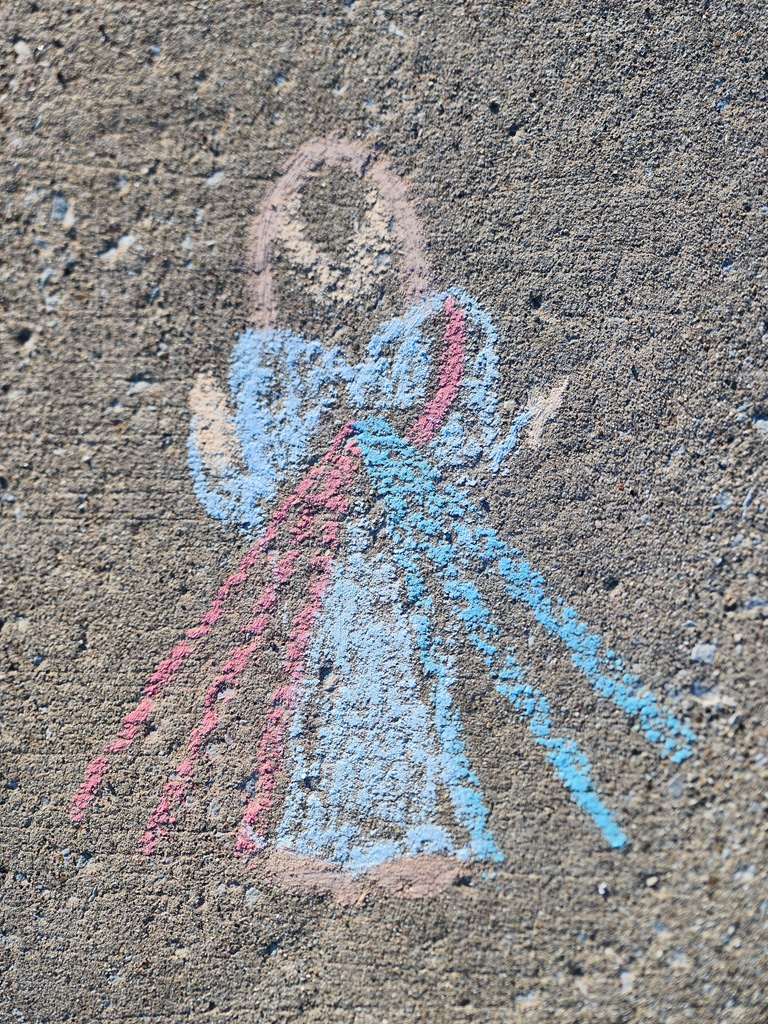
In my own circle, many of the best, holiest people I know seem to labor under the delusion that their personal sins are insurmountable. I am frequently inspired by the goodness and righteous zeal of the people in my family and community. Yet, they talk about themselves as if they are worthless and utterly undeserving of forgiveness. Even after running to confession, many Catholics go through life speaking and acting as if they cannot possibly hope to merit God’s mercy. With the exception of Mary, we are all undeserving. However, in my experience, God doesn’t give us things because we deserve them. I’m still trying to figure out how to be someone who deserves the amazing man I married and the sweet little girl we created together. As far as I can tell, I’m not even close. Happily, in addition to being perfectly just, God is also perfectly merciful. After confession on one divine mercy Sunday I was reduced nearly to tears at the realization of this ultimate love and compassion He has for us. He is the perfect forgiver. Though I have done wretched and regrettable things in my life, none of them are greater than His flawless mercy for each and every one of us. 

Of course, not everyone will be saved. Society has dumbed down many of the Church’s teachings to the point that Christ is often treated as a supernatural wingman; someone to pal around with every Sunday and who will always get you out of a tight spot. Though it may occasionally be comforting to assume that we’re all generally good people who are all in God’s good graces, the reality is that this line of thinking is itself sinful. God is not a lucky charm or a genie in a bottle. To bounce through life presuming on God’s forgiveness is to forget the horror, pain and enormity of Christ’s sacrifice on the cross. His agony and death gifted us a path to salvation, but we are still called to actively choose that path.

Only the sincerely repentant sinner can hope to achieve salvation and therefore, the sincerely repentant sinner should hope for salvation. To aim any lower than sainthood is to deny oneself the full benefit and blessing of God’s ultimate gift for us, sent to us through His Son.

Bring Back the Overture!

Photo by Ylanite Koppens

This may be my least popular opinion to date. My husband recently showed me the movie, Ben Hur during a lenten date night. I highly recommend this Christ-adjacent film to anyone looking for an epic religious watch. Among the things I love about this movie, it has a 6 minute overture. This 1959 classic was created in a time when films were an experience rather than an easy way to kill a couple hours on the couch. They were made to draw you in, take you on a journey and teach you something along the way. No wonder the overture was 6 minutes. In order to fully embark on such an adventure one must first settle into the proper frame of mind and put aside all other cares for a while. 

Sadly, even my husband and I didn’t sit through the entire overture. Our excuse was that after putting baby to bed it was already late and Ben Hur is not a short movie. Everyone can come up with a similarly valid excuse to fast forward to the opening scene. We are a society of people totally incapable of sitting still and entering into an experience for just 6 minutes. Even in the theater, the overture has been replaced by mind numbing previews. There is a need for constant entertainment at the push of a button which has infected every corner of our society. It’s practically unthinkable to go for a drive without switching on the radio or a preferred podcast. To simply sit with our own thoughts even for a few minutes is outright nightmarish. 

We desperately need the overture in our lives. In addition to being a marker of inspired storytelling, it was also a luxury of a slower, simpler time. Going to the movies was a fun outing and a much needed break after a long week of hard work. Now people hide from the world and from work to binge shows on their computer. They need not even leave the comfort of their own bed. This once communal pastime has been entirely flipped on its head. 

Additionally, this inability to endure 6 short minutes of rousing orchestral music at the beginning of a film highlights a much deeper issue among people today. If we can’t do this, how on earth are we ever going to be able to sit in silent, rapt attention before God? I am a firm believer in the power of prayer, especially fervent prayer before the Blessed Sacrament. We fill every waking minute with noise, tuning into any voice we can find for fear of a silence which might allow us to hear the one voice that matters most. Over the din of life how can we possibly hear God when He speaks to us?

Seasons of Love

Photo by Rainstorm Photo

Apologies for the lack of posts lately. This mommy’s usual blogging time was spent snuggling a sweet little girl with a case of the sniffles over the last couple of weeks. She was extra cuddly and not thrilled about long naps by herself in the crib for a while. As I write this, she is snoring happily in her room. Praise God!  

I recently had cause to consider the role of the Catholic faith in marriage. It’s easy to gush about the beauty and permanence of sacramental true love when everything is shiny and new. My husband and I are still living the fairytale. We have been married for nearly three years and have fallen even more in love with each other since we said I do. We have one perfect baby girl and, God willing, will be giving her some siblings in the near future. With the exception of a few difficult days I can honestly say that thus far marriage has been a delight. However, I was reminded of something the priest said during our Pre-Cana. The wedding is not the goal. It’s not the end. For most couples it’s not even happily ever after. Certainly happiness will be seeded throughout the life that you’ll build together but real marriage is not a fairytale. Rather the wedding is the beginning of the story. 

No matter who you are or how in love you may be, the honeymoon will come to a close eventually. The reality of the rest of your life with this same, flawed, broken person will set in. You may say and do things to each other that you regret. You may learn things about your spouse which very well may have been deal breakers if you’d known them before getting married. Someday you may even wonder if you would’ve been long separated if not for your mutual commitment to the Catholic faith. These thoughts of doubt do not make you a bad spouse but are merely manifestations of our fallen human nature. 

As with any vocation, marriage comes with seasons of joy and of hardship. You and your spouse are different people and will clash eventually. Of course kindness toward your spouse is never overrated. There is no single person on the planet more deserving of your forgiveness and grace than the one who has promised to put up with all of your nonsense for the rest of their life. Unfortunately, it’s also true that familiarity breeds contempt. There may come a day when compassion toward your spouse falls shy on your list of priorities.

It is in these seasons of darkness and distance in your marriage when a strong Catholic faith is absolutely critical. If it was easy everyone would do it. We Catholics are not called to do what’s easy. The cross of marriage can be the heaviest of all, particularly in those moments when it seems like your faith is the only thing you have left in common. That cross will grow and some days seem unbearable. We will fall under its weight like our Lord on the Way to Calvary and, like our Lord, we too must find the strength to pick it up daily and continue on in our marriage as a loving husband or wife. That one thin, crucifix-shaped tether between you and your spouse can and will hold you together and see you to better seasons if you let it. God can work miracles through anyone. Even if you have to wait for the bliss of salvation in Heaven, better days are coming. 

As I write this I know full well that our difficult seasons are still to come. These lessons don’t come from my own experience but from listening to the experiences of others. As God intended, marriage is the closest we can get to heaven on earth but in our fallen nature we often forget the bliss of this particular sacrament. Thus, it is always necessary to remind ourselves of the fairytale when our own stories first began by perusing the wedding album or making time for date night. As stated earlier, marriage is not a job or merely a relationship. It is a vocation calling us to give one hundred percent of ourselves even on those days when it seems that one hundred percent doesn’t amount to all that much. 

Sleep Regression: The Gift of Difficult Naps

Our baby girl is growing up. Teeth are coming in and she’s starting to take solid foods. She’s just discovered how to crawl, albeit a strange one-legged crawl that makes her look like a hermit crab. She can now pull herself to standing and it won’t be long before she figures out how to toddle around on two legs. These are all very big changes for a very little person and they have taken a toll on her nap routine. After months of long easy naps in the crib our daughter has hit yet another round of dreaded sleep regression. During the day she sleeps more on me than she does anywhere else at the moment. I was just beginning to get the hang of household chores and meal prep in those quiet hours when she enjoyed her afternoon siesta but we have once again leveled up.

Although her freshly difficult naps come with a brand new set of inconveniences, I can’t honestly say that I’m terribly upset about it. I don’t always get to the dirty dishes in the sink or the clutter on the coffee table and my arms occasionally start tingling from holding her for long stretches at a time. However, truth be told, I’m loving every minute of it. I am drinking up each and every hour that passes with her snuggled against my chest. My day-to-day is far from productive but amid all of her new growing pains she became downright cuddly. As the song goes, “let them be little.” One day, not so far from now, she won’t need mommy’s shoulder to fall asleep on. I can’t wait to chase her through all of the walking and talking still to come but for now I am savoring the blessing that is sleep regression. 

Motherhood is Not Traumatic

Photo by Polina Tankilevitch

This seems to be an unpopular opinion in society though happily is gaining traction. I recently listened to an episode of Pints with Aquinas where Matt Fradd interviewed Nick Freitas. At one point in the conversation Nick made the observation that we have a tendency to ‘bubble wrap’ the world for every veteran we meet because we incorrectly assume they have all experienced trauma. I believe that we’ve done the same thing to motherhood in a way. 

For one thing, I think we put far too much emphasis on postpartum depression. When a woman becomes pregnant she can hardly turn around without hearing assurances that it’s okay if she doesn’t feel that instant connection when baby is born. Of course, postpartum depression is real and it by no means makes you a bad mother. I simply believe this is the exception and not the rule. We have turned pregnancy and childbirth into a medical condition bordering on a disorder when, in the past, it was always a beautiful and natural human process. Despite the exhausted struggling mothers we see on TV, I think most women are blessed as I was, with the overwhelming joy of motherhood upon giving birth. 

This leads to my second objection to the traumatic motherhood mentality. Although your body, your schedule and your life will never be the same after pregnancy and childbirth, these changes are generally for the better in my opinion. At no point have I found myself itching for an excuse to get away from my daughter. If anything, I adore her too much, sometimes to the exclusion of other important things. People are so eager to lend a hand with babysitting or simply by holding baby so mommy can have a break. While this is greatly appreciated and occasionally necessary, it’s never really been the kind of help I wanted. In truth, I was often far happier in the early days to accept a home cooked meal from a friend while I got to simply become acquainted with this beautiful new human God gave us. To this day I still don’t enjoy leaving baby girl with others, even trusted family members, when my husband and I go out. Our daughter is not someone I want a break from. 

My life did not end when she came into it. Quite the opposite. Likewise, I have never resented my stretch marks. Perhaps that does put me in a minority, but I look like a mom and it’s a fact that I am immensely proud of. My body now bears visible signs of the sanctifying work I have given my life to. My husband isn’t less attracted to me because my tummy has a few lines on it. I am still perfectly able to dress neatly and attractively, never having felt the need to resign myself to lumpy mom jeans. In short, I am not a victim of motherhood. I am not a slave to my baby. This is no more or less that the work that I signed up for, the work I believe God made me for. I am absolutely overjoyed to fulfill that purpose, the vocation of marriage and all it entails including the responsibilities of motherhood. 

Becoming a Crunchy Mom

Photo by Suzy Hazelwood

Have you ever been out to eat and seen an infant propped in front of an ipad while the adults chat, blank eyes reflecting the blue light of the screen, mouth agape, totally dead to the world, their trance rendering them completely mute and ignorable? It’s a scene which is far too normal in society today and one that breaks my heart every time. While I’m certainly not the crunchiest of mothers, my husband and I have begun to embrace some old school parenting with our daughter. I don’t make my own clothes (with the exception of some very minor dabblings with knitting) and I haven’t yet hit my canning phase apart from the occasional daydream. 

At this point my husband and I are simply committed to limiting technology for our baby girl. For instance, we don’t let her play with our phones which means we also try to be off of them as much as possible while we’re around her. She takes interest in whatever mommy and daddy are holding so we are trying not to have them in hand too often. Perhaps this is unnecessarily strict but when my husband and I first began talking about starting a family we agreed that we did not want a nanny. That includes the screen nanny. We don’t believe that there is ever a scenario in which kids need to be quiet at all costs. Certainly they need to learn to behave in public but that doesn’t mean they need to stop being their naturally active, playful, chatterbox selves. Baby babble or even the occasional tantrum may be off putting to other business patrons when out around town. In my opinion however, this is still no justification for shutting them up with a screen.

In addition to minimal screen time we are also being very intentional about the toys our daughter is surrounded by, limiting the electronic gadgets in favor of simple mechanical toys. We hope this will help to encourage good, old-fashioned, imaginative play. Too often I think kids simply learn how to punch buttons and engage in perpetual ‘Simon Says’ with an endless stream of flashing, beeping gizmos. I believe kids should instead discover how to make their own fun. In this spirit, we also do daily story time and get outside whenever possible to take full advantage of the ever entertaining great outdoors. I know that my husband and I have been blessed with a very good and happy baby and many parents are not so lucky. These goals may seem impossible or at least ambitious but my husband and I are both immensely grateful to our own parents for filling our childhoods with knee-scuffing adventures. We pray we can impart the same to our children.  

Afternoon Tea

We have officially been back in ordinary time for a number of weeks. The Christmas season has come and gone and with it the mountain of sugary treats on our kitchen table. The hubby and I thoroughly enjoyed celebrating the nativity of Christ with an assortment of cookies, chocolates and other holiday goodies.

However, as we move through the liturgical calendar our hearts and belts are happy to check our sugar intake. We hope this will aid us in maintaining healthy habits as well as guide us to a deeper understanding of Christ through intentional and liturgical living. Therefore, during ordinary time we have resolved to live ordinarily, forgoing desserts and sweets except for feast days or special occasions with friends or family. This also means no afternoon hot cocoa for wifey on chilly winter days. I instead warm myself with a steaming cup of tea in a delightfully hobbit-like fashion. I’m traditionally a coffee drinker and while this is no replacement for that welcome morning beverage I’ve come to look forward to afternoon tea time.

My husband and I have already found our sugar cravings greatly diminished just in these first weeks. Undoubtedly we will be tempted at times to bend our new healthy habits, particularly as we look toward Lent when we will be instituting additional offerings. However, I’m happy to report that afternoon tea has become a welcome treat in its own right.  

NFP Pros and Cons

Photo by Alexandro David

During our time running our parish marriage prep ministry we’ve met many dutiful and faithful Catholics approaching the Sacrament of holy matrimony. However, the majority of them are somewhat uninformed and unpracticed when it comes to Natural Family Planning (NFP). As Catholics we must always be open to life which means we avoid the use of birth control and contraceptives which deprive us of God’s gifts and blessings. This does not mean we are prohibited from making informed decisions about when to grow our families. This is where NFP comes in. There are a number of methods for tracking a woman’s natural menstrual cycle in order to determine times of high and low fertility. Equipped with this knowledge it is possible to choose when to invite new little ones into the world. While this can be a highly effective means of family planning it is not without its difficulties and so today I want to share some of the pros and cons of using NFP.

Pros

  • During those times when you are not actively looking to grow your family, NFP is as effective as any birth control at preventing unplanned pregnancies. One common misconception about NFP is that it is unscientific and imprecise. However, when properly adhered to, it’s an incredibly reliable means of planning and spacing pregnancies.
  • NFP is completely natural and free of the hormones and chemicals present in birth control used to artificially regulate a woman’s cycle and which can be harmful to her. Birth control can and often does come with a number of side effects including headaches, mood swings, decreased libido and even weight gain. It can also correlate with rare but more serious risks like blood clots, cancer and ectopic pregnancies. 
  • Practicing NFP can help to grow the trust and affection between you and your spouse. Whether you are trying to become pregnant or not, using NFP is a team effort. You and your spouse will be called to periods of abstinence during which you will have to find other ways of expressing your affection for one another beyond sexual intimacy. This might look like you both picking up extra little chores around the house or treating yourselves to a night out. 

Cons

  • Because NFP relies entirely on a woman’s menstrual cycle, it is most effective and easiest to practice when her cycle is regular. Through adherence to healthy diet, sleep and exercise a lady can naturally regulate her menstrual periods. However, for some women, this is simply not possible, whether due to demanding work schedules or the presence of small children in the home. Even something as mundane as a common cold can be enough to throw off her calendar. Long stretches of abstinence can put strain on your marriage. We Catholics believe that the sexual embrace is a renewing of a couple’s marital vows and a necessary part of holy matrimony, not just for the purpose of conceiving children. However, for those women who struggle with a regular cycle, there may be weeks or even months of abstinence when it will be necessary to find other ways to come together in your marriage. NFP often calls for heightened self discipline and support from your spouse. 

These are certainly not the only considerations when using NFP. Many people are unaware of the abortive aspect of hormonal birth control. Likewise, women often find they are much more confident in their knowledge of their own bodies when they start using NFP. Unfortunately, it is also true that using NFP requires constant commitment and sacrifice but on the whole, and from a Catholic perspective, the pros far outweigh the cons.

Called

Photo by Daria Obymaha

It’s easy to let a tinge of despair creep into our lives if all we ever do is watch the news. The broadcast worthy stories hardly ever seem to have happy endings (excluding our recent and historic election. Yippee!). I firmly believe it is the responsibility of every individual to be informed of the happenings in the world. However, every now and then, we all need to turn off the news and simply enjoy life. When we go out into the world and participate we discover once again that people really are remarkable. They’re resilient and intelligent and passionate, each fueled by a perfectly distinct and driving fire to do something important. For many, this manifests in a career. 

In a family of engineers, doctors and soldiers, I am surrounded by these people, hardworking individuals who have devoted their lives to the service of others. When speaking with them it requires no effort to see that their chosen fields of work are no less than a calling from God. In some way they are each duty bound to make use of their talents and passion for the betterment of humanity. 

Throughout my life I have been constantly inspired by these people though I admit that I’ve also found myself incredibly envious at times. I’ve never felt similarly compelled to any particular career and for a long time I wondered if this was a deficiency of my own character. My driving fire has never infused in me a need to participate in great technological advancements or save lives or defend the innocent. Rather I believe I inherited the hospitality bug from my mom. I like to feed people. I delight in home cooking, music and good conversation, despite being tremendously shy. I am most fulfilled while bringing warmth and good cheer to friends, family and strangers alike. 

Although I am perfectly content in my decision to be a stay at home mom, lately I’ve been feeling the need to justify this choice. We live in a time where everyone is free to chase their dreams to the ends of the earth and encouraged to do so. Our society tells men and women alike that they should have careers and that these will be their most important contributions to the world. I am a member of a generation which has been brought up under the belief that a college degree and a good job are the markers of ultimate success. For some, my bowing out of such a job in the steel industry seems akin to throwing away a dream, especially considering the years of education and work which went into acquiring it. 

This is something I’ve considered long and hard and I truly don’t believe that I’m throwing away anything. Though it was a perfectly good job and may have turned into a career had I stayed, for me it was always done in the service of my actual dream, to be a wife and mother. It may seem a far less ambitious calling than those of my relatives. It’s likely that no one will ever remember my deeds as particularly noteworthy. However, in a world of geniuses and heroes, I am simply called to be a wife and a mom. I couldn’t be happier!