A Church Shaped Hole

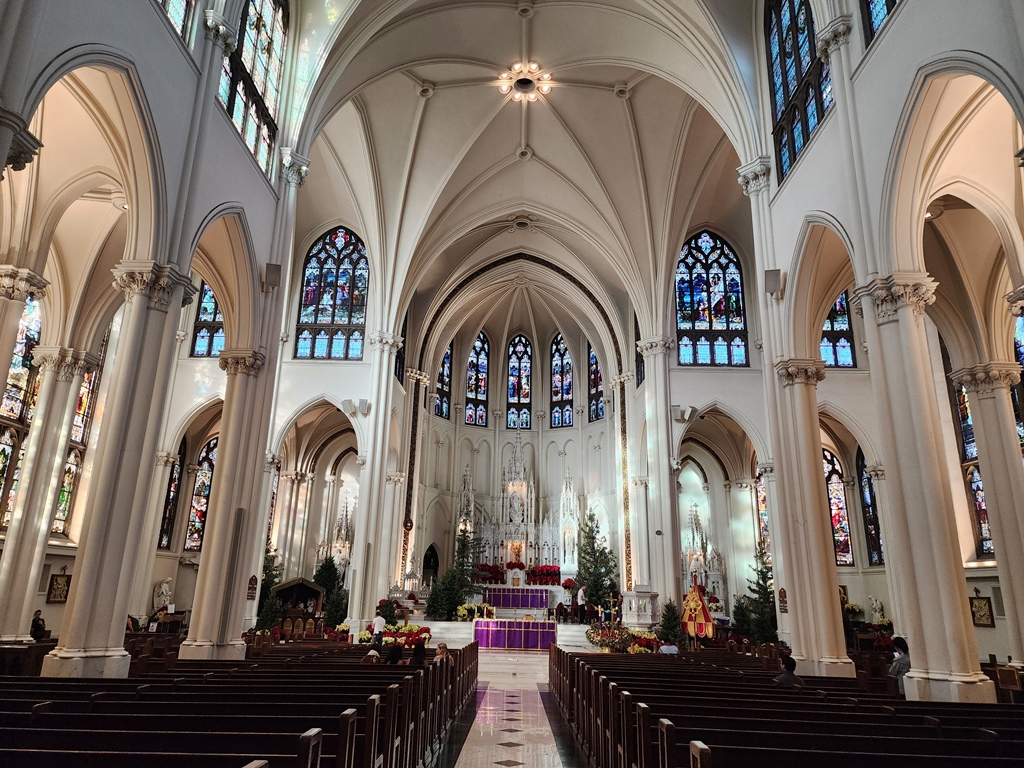
Although our world is full of knowledge and technology beyond imagining, modernity does still leave a few things to be desired. Modern architecture in particular tends to leave a church shaped hole in the hearts of many Catholics. Thankfully, the popularity of theater seating or church in the round seems to be on the decline but those erected during the 70s revocation are often still in use. 

Throughout history Catholic churches were traditionally built in the shape of a cross. There was one longer arm, the nave, where the assembly would sit and two shorter wings nearer to the head of the cross called the transepts (North and South respectively) which could offer additional seating or house chapels. The altar was always reserved for the head of the cross. This layout was and still is incredibly significant in Catholic teaching. The larger body of the church where laity sat has sometimes been called an arc, calling to mind the story of Noah and the flood. However, more importantly, it is a reminder of Christ’s sacrifice on the cross. That Christ died in such a brutal way for the repentance of our sins is the most central teaching of the Catholic Church. Structures built to house His most precious body and sacred blood are meant to reflect this teaching. 

Likewise, minimalist art and architecture, while certainly cost effective, have only in recent decades found home in Catholic churches. Before this, Catholic churches were intended to point to the glory of God in Heaven. These were truly houses of God, complete with intricate tapestries, ornate mosaics, vaulted ceilings and elaborate stone and wood work. Many of them were built around huge pipe organs which were the preferred instrument for raising hymns to God as they were most akin to the sound of dozens of heavenly voices singing in tandem, like a choir of angels. Altars were constructed of glistening gold and hewn marble to be radiant markers of the presence of the real body and blood of Christ. These sanctuaries were meant to give us a small glimpse into the beauty of Heaven. 

Additionally, the radiance and intentional structure of Catholic churches encouraged proper practice among parishioners. The one long aisle down the center of the nave traditionally meant that everyone was able to receive communion from the priest rather than an extraordinary minister. This also usually occured from a kneeling position as communion rails were similarly common. A stage or music pit for the choir and accompaniment was totally unnecessary as most churches were constructed with a choir loft at the back of the church from which heavenly hymns would rain down on the assembly rather than become the main event, distracting from the sacrifice of the mass. Parishioners were all seated in the same direction, oriented toward Christ, again minimizing the distraction of awkward eye contact with other lay people on the opposite side of the church.

In such an environment there was no mistaking the holy mass for a performance. So many people, even the most devout Catholics, are prone to critique a particular mass whether due to an over long homily or an out of key cantor. Mass has so frequently become the Sunday morning show and we’ve forgotten why we’re actually there. 
Here I Am

My husband and I have been trying to squeeze adoration and daily mass into our schedule more frequently. Sometimes it’s a bit of an effort as neither of us are currently blessed with an abundance of free time but I never regret it. Fr. Mike Schmitz highlighted our Catholic mission perfectly in his Catechism in a Year podcast when he spoke of how we are called to live outside of Sunday worship. Our faith ought to inform everything we do. When looking for vacation destinations we have to also keep in mind the availability of a Catholic church and mass while away from home and we should consider committing to daily mass during those days of rest and relaxation. We should give more to God on our days off and in our moments of spare time because those are the moments when we have the most to give. God is for us always, not just when convenient. We ought to be for Him in the same way.

It was in this spirit that my husband and I agreed to make time before the Blessed Sacrament a larger portion of our day-to-day. Often, the small, ordinary comfort of habitual prayer before the Eucharist is the only reward, though still well worth it. However, there are other moments of being touched and utterly overwhelmed by God’s grace. Such was the case one Tuesday morning in early July. We both had the day off from work for our nation’s Independence Day and chose to begin the celebrations with morning adoration and mass. 

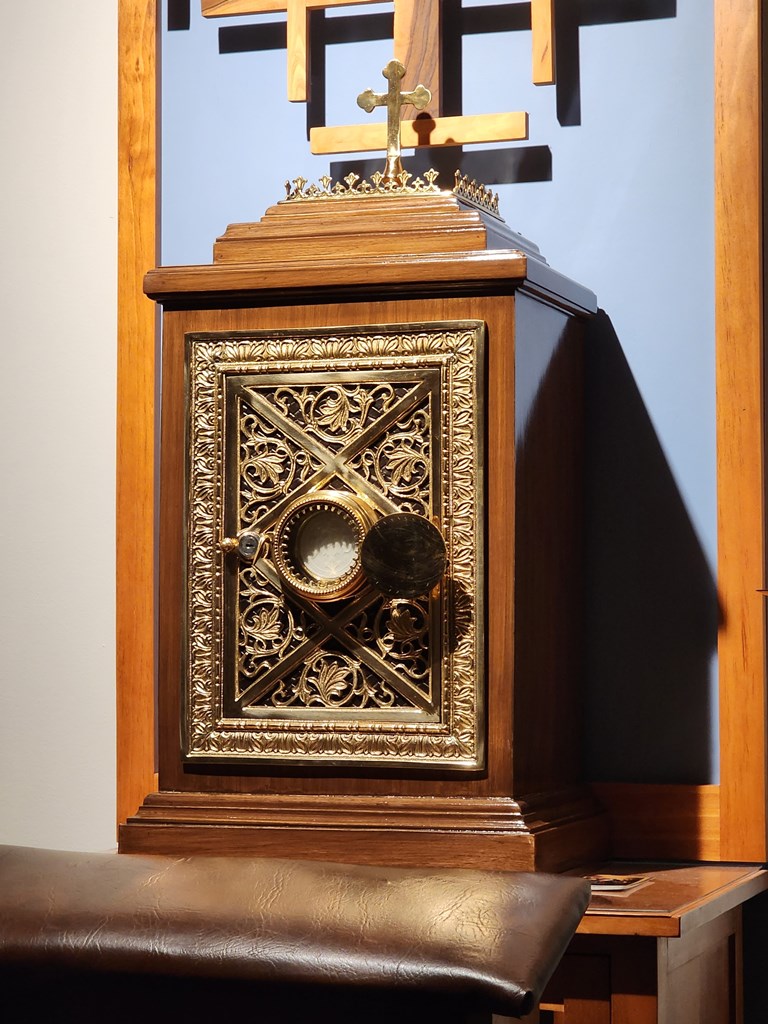
We like to attend adoration at our local university’s chapel. It’s an intimate experience as the little chapel is a simple, windowless room barely large enough to accommodate five chairs and one solitary kneeler set directly before a tabernacle which can be opened and closed by visitors without endangering the consecrated host inside. On this occasion we were the only two visitors and used the time to pray our daily rosary as well as a divine mercy chaplet. As we recited the chaplet my mind drifted to the real presence of Christ in the Eucharist on silent display at the front of the tiny dimmed room. 

I thought of Christ, the man, with us in adoration and was stunned at how easily and vividly that image came to mind. I didn’t have to wonder at what He would look like, how He would dress or His mannerisms as we prayed before His blessed body. Those details came into view without any effort of my own. I could almost see Him kneeling directly in front of the host between my husband and I as we sat praying on either side of the tabernacle. His back was to us, hands steepled and head bowed in silent prayer to His father. I couldn’t see his face but I don’t believe that was the point. I wouldn’t have been there if I didn’t already believe in the real presence. This image, clear as day, was not proof but consolation. He was simply there, lovingly present with us. It was like a parent’s embrace to a child which says you are safe, you are loved and you are not alone. As this scene of the three of us played out in my mind and our divine mercy chaplet drew to a close He never turned and He never spoke but three words were plastered across my consciousness and haven’t left me since. “Here I am.”

This is Amazing!

The Holy Spirit is at work in the world, in my childhood home no less! It’s such a blessing to encounter stories like this, especially ones involving the vibrant, gorgeous Colorado town where I grew up. This was a welcome read and I’m sending prayers to the community of St. Stephen Catholic Church that they can continue to walk with Jesus in all things.

The Real Presence

I attended a theology uncorked event recently where the associate pastor gave a presentation on the Eucharist. His talk was full of calls to live our faith in small everyday ways and to embrace all doctrines of the Catholic church. This was truly more of a plea than a demand as he cited studies showing an overwhelming majority of Catholics do not believe in the real presence. How can this be?

Along my journey to faith terms like ‘benchwarmers’ and ‘piecemeal Catholics’ came up. There will always be those who struggle to practice what they preach or see fit to only follow certain teachings of the faith which they find most to their liking. But when did they become the rule instead of the exception? 

How can we help them? As a member of several ministries within our parish and as a newly devout Catholic myself I’ve been asking this question a lot lately. Sometimes I still struggle to find the balance between being pious and preachy and being a loving disciple of Christ. Of course everyone must accept Christ’s teachings in their own time and of their own free will. We can’t force people to believe in the real presence at mass. But as Catholics we are called to love our neighbors which includes spreading God’s word and love and speaking up when we see our brothers and sisters going wrong in their faith. 

Through transubstantiation, the consecrated host and wine at mass truly become the body and blood of Christ. As the associate pastor reminded us, we do not go to mass for the music or the aesthetic or even the homily. All of these things help us to worship and praise God but they are not the purpose of the Catholic mass. We attend church every Sunday to receive Christ through the Holy Eucharist. We become living hosts of God and subject to all the graces which come with that. 

Mass is not simply an empty routine to fill an hour every Sunday. Mass is where we go to worship God. Whether we enjoy the homily or are pleased with the choir’s performance, we always receive Christ.